Moving to South Korea comes with a massive list of perks, and near the top is the food. Real Korean dining is interactive, loud, intensely flavorful, and designed around sharing. That said, if you’re fresh off the plane, walking into a local neighborhood spot where nobody speaks English can feel a little intimidating.
Here is a practical breakdown of how food works in Korea, expanded dish recommendations, familiar comfort foods, and a few surprise taste twists to watch out for.
The Core Flavors
Korean food relies on a handful of heavy-hitting fermented ingredients that build deep, complex flavors. Once you recognize these, the menus start making a lot more sense:
-
Gochujang (고추장): Fermented red chili paste. It’s sweet, savory, and carries a solid kick. You’ll taste it in bibimbap, tteokbokki, and most red sauces.
-
Doenjang (된장): Fermented soybean paste. Think of it as miso’s bolder, earthier, funkier cousin. It forms the base of classic comfort stews.
-
Ganjang (간장): Korean soy sauce, used constantly in marinades, dipping bowls, and soup bases.
-
Garlic & Sesame Oil: Almost every savory dish relies on crushed garlic for heat and toasted sesame oil for richness.
The Magic of Banchan (Side Dishes)
Sit down at almost any restaurant in Korea, order one main dish, and the server will immediately cover your table in small bowls before your main meal even arrives. This is banchan (반찬).
-
It’s included: You don’t pay extra for these, and they aren’t appetizers—you eat them alongside your main dish.
-
Refills are expected: When a bowl runs dry, you can ask for more (“Banchan deok ju-se-yo”) or walk up to the self-service station that most casual spots have in the back.
-
Kimchi is mandatory: You will get at least one style of kimchi with every single meal. Cabbage (baechu kimchi) is standard, but you’ll also see cubed radish (kkakdugi) and cucumber (oi sobagi).
10 Essential Korean Dishes to Try
Table-Grill & Meat Specialties
-
Samgyeopsal (삼겹살): Thick slabs of pork belly grilled directly at your table. Cut the meat into bite-sized pieces with kitchen shears, pop a piece onto a lettuce leaf, add a slice of grilled garlic and a dab of ssamjang (dipping paste), wrap it into a bundle, and eat it in one bite.
-
Dakgalbi (닭갈비): Marinated diced chicken stir-fried at your table in a huge cast-iron skillet with cabbage, sweet potatoes, rice cakes, and spicy gochujang sauce. Adding melted cheese around the edges is standard practice.
-
Bulgogi (불고기): Thinly sliced beef marinated in a sweet and savory sauce made of soy sauce, sugar, sesame oil, and grated pear. It’s mild, tender, and universally approachable.
Comfort Stews & Soups (Jjigae & Tang)
-
Kimchi Jjigae (김치찌개): A bubbling, sour-and-spicy stew made with aged kimchi, pork or tuna, scallions, and thick slabs of tofu. It’s the ultimate rainy-day comfort food.
-
Sundubu Jjigae (순두부찌개): Extra-soft, silky uncurdled tofu cooked in a spicy broth with seafood or pork, often served with a raw egg cracked directly into the boiling bowl at your table.
-
Gamjatang (감자탕): A rich, hearty pork backbone soup simmered with potatoes, wild sesame powder, and green vegetables. The meat falls right off the bone.
-
Seolleongtang (설렁탕): A milky-white, long-simmered ox bone broth served unsalted. You season it yourself at the table with sea salt, ground black pepper, and fresh green onions.
Rice, Noodle & Street Staples
-
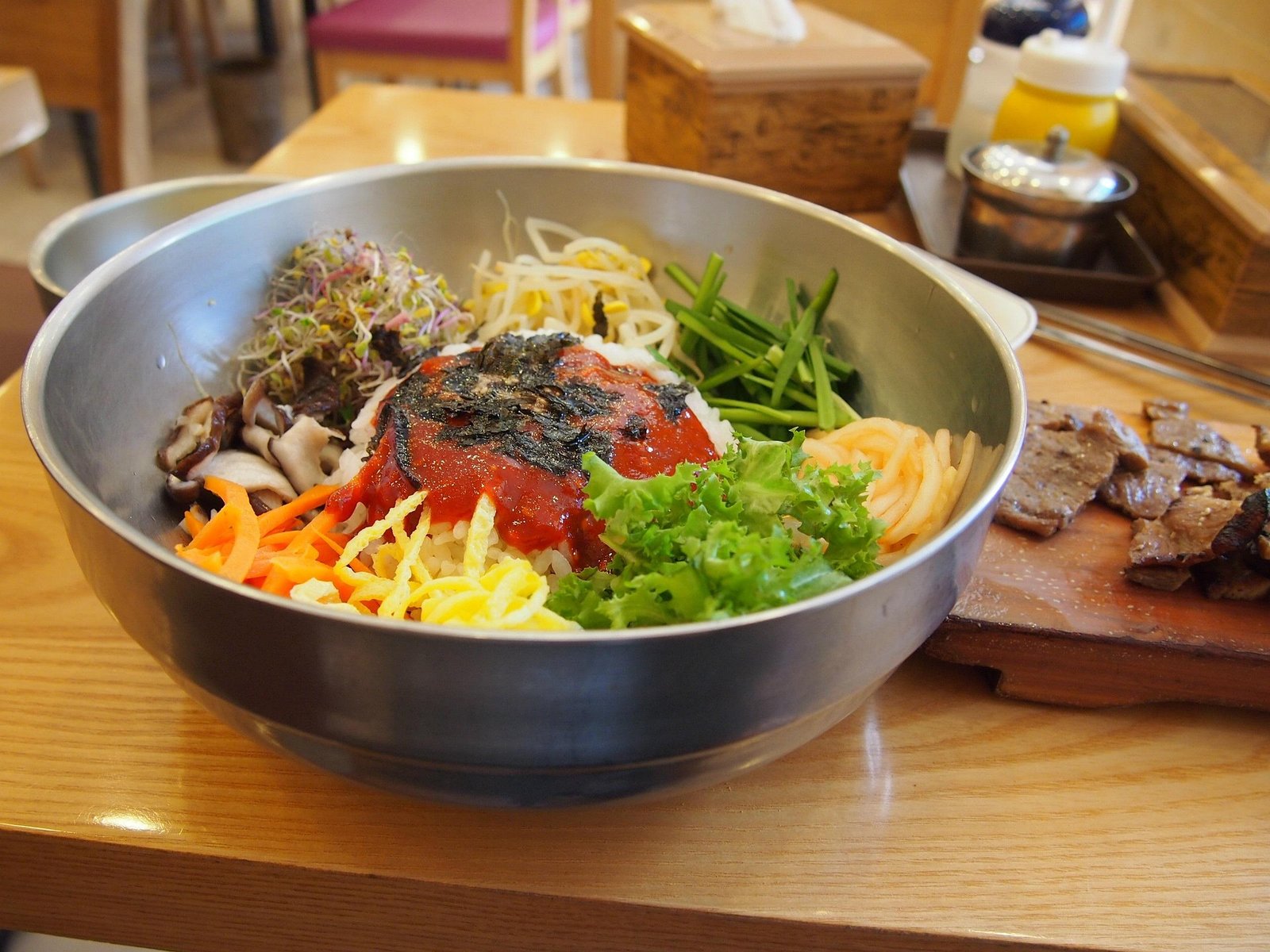
Bibimbap (비빔밥): A bowl of warm rice topped with sautéed vegetables, beef, a fried egg, and gochujang. Ordering dolsot bibimbap gets you a piping-hot stone bowl that crisps the rice against the bottom while you mix.
-
Jajangmyeon (짜장면): Thicker wheat noodles smothered in a dark, savory fermented black bean sauce with diced pork and onions. It’s Korea’s go-to Chinese-takeout comfort dish.
-
Tteokbokki (떡볶이) & Gimbap (김밥): Chewy rice cakes in spicy sauce paired with seaweed-and-rice rolls filled with pickled radish, carrots, and egg. They are the twin pillars of late-night street food stalls (pojangmacha).
Fair Warning: Western Food Will Taste Different (And Much Sweeter)
One surprise for almost every Western expat is how Korean bakeries and fast-food chains adapt Western recipes to local palates. The biggest difference? Sugar.
-
Sweet Garlic Bread & Pizza: Garlic bread is frequently brushed with a heavy condensed milk or sugar glaze. Pizza toppings often feature sweet potato paste, corn, and sweet mayonnaise drizzles alongside savory toppings.
-
Sandwiches & Salads: Commercial sandwich spreads, potato salads, and salad dressings lean heavily toward sweet profiles. Even basic white bread (sikppang) sold at major bakery chains like Paris Baguette has a noticeably higher sugar content than standard grocery store loaves in North America or Europe.
-
Potato Chips & Snacks: Classic potato chip flavors like sour cream and onion or plain salted are often overshadowed by sweet butter, honey, or sweet-salty cheese dustings.
Finding Familiar Comfort Foods
If you get hit with a bout of homesickness or just want something familiar, you won’t have to look hard in major Korean cities:
-
Korean Fried Chicken (Chimaek): While distinctly local, fried chicken in Korea is widely considered some of the best on Earth. Brands like Kyochon, BBQ, and BHC offer super-crispy wings and boneless cuts ranging from plain soy-garlic to fiery chili glazes. Paired with a cold draught beer (maekju), it’s a national institution.
-
International Fast Food & Coffee Chains: McDonald’s, Burger King, Subway, and Starbucks are everywhere. While seasonal menus feature local twists, core items remain consistent.
-
Foreign Food Districts: In Seoul, neighborhoods like Itaewon, Hongdae, and Gangnam host authentic international restaurants covering everything from Mexican tacos and Indian curries to authentic Italian pasta, American craft burgers, and authentic Southeast Asian street food.
-
Import Grocery Stores: Chains like Foreign Food Mart in Itaewon, Costco, and online delivery portals like Coupang make it easy to order imported cheeses, specific spices, peanut butter, and Western pantry items directly to your doorstep.
Basic Table Etiquette
You don’t need to stress over strict protocol, but keeping a few basic customs in mind goes a long way:
-
Wait for the eldest: If you’re out with coworkers or older companions, wait until the oldest person at the table picks up their spoon or chopsticks before you start eating.
-
Hands on the table, not the bowl: Leave your rice and soup bowls on the table. Lifting your bowl to your mouth looks sloppy in Korea.
-
Pouring drinks: When someone pours a drink for you—or when you pour for someone else—use two hands (or place your off-hand under your forearm/elbow) to show respect.
-
Chopstick position: Rest your chopsticks on the small holder or across the edge of your dish. Never stick them vertically into your bowl of rice, as this resembles incense burned at memorial services.