Being a vegan or vegetarian in South Korea used to be a major challenge, but the country’s plant-based scene has grown rapidly in recent years. While major cities like Seoul, Busan, and Daegu host a growing number of dedicated vegan cafes and plant-based restaurants, traditional Korean dining can still be tricky to navigate.
Many dishes that appear vegetarian on the surface rely on animal-based stocks or fermented seafood seasonings. Here is a practical guide to identifying hidden animal products, finding plant-based food, locating top vegan spots in major cities, and communicating your dietary needs effectively.
The Hidden Non-Vegan Ingredients to Watch For
In Korean cooking, meat and seafood are frequently used as background flavor bases rather than main ingredients. Even if a dish contains no visible pieces of meat, it may include one of the following:
-
Myeolchi-Yuksu (멸치육수): Anchovy broth used as the default base for almost all traditional soups, stews, and noodle dishes (including kalguksu and doenjang jjigae).
-
Jeotgal (젓갈): Salted fermented seafood (shrimp paste or fish sauce) used in nearly all traditional cabbage and radish kimchi.
-
Beef Dashida (다시다): A ubiquitous powdered beef bouillon used to season stir-fries, soups, and rice dishes.
-
Fish Sauce (액젓 – Aekjeot): Added to dipping sauces, side dishes (banchan), and dressings for extra savory flavor (umami).
Safe Korean Dishes for Plant-Based Eaters
While eating out requires some vigilance, several traditional Korean foods are naturally plant-based or easily modified:
Naturally Vegan or Easily Customizable
-
Sachal Eumsik (사찰음식 – Temple Food): Korean Buddhist cuisine is strictly vegetarian and virtually always vegan. It avoids meat, seafood, and the five pungent herbs (garlic, green onions, wild chives, leeks, and onions).
-
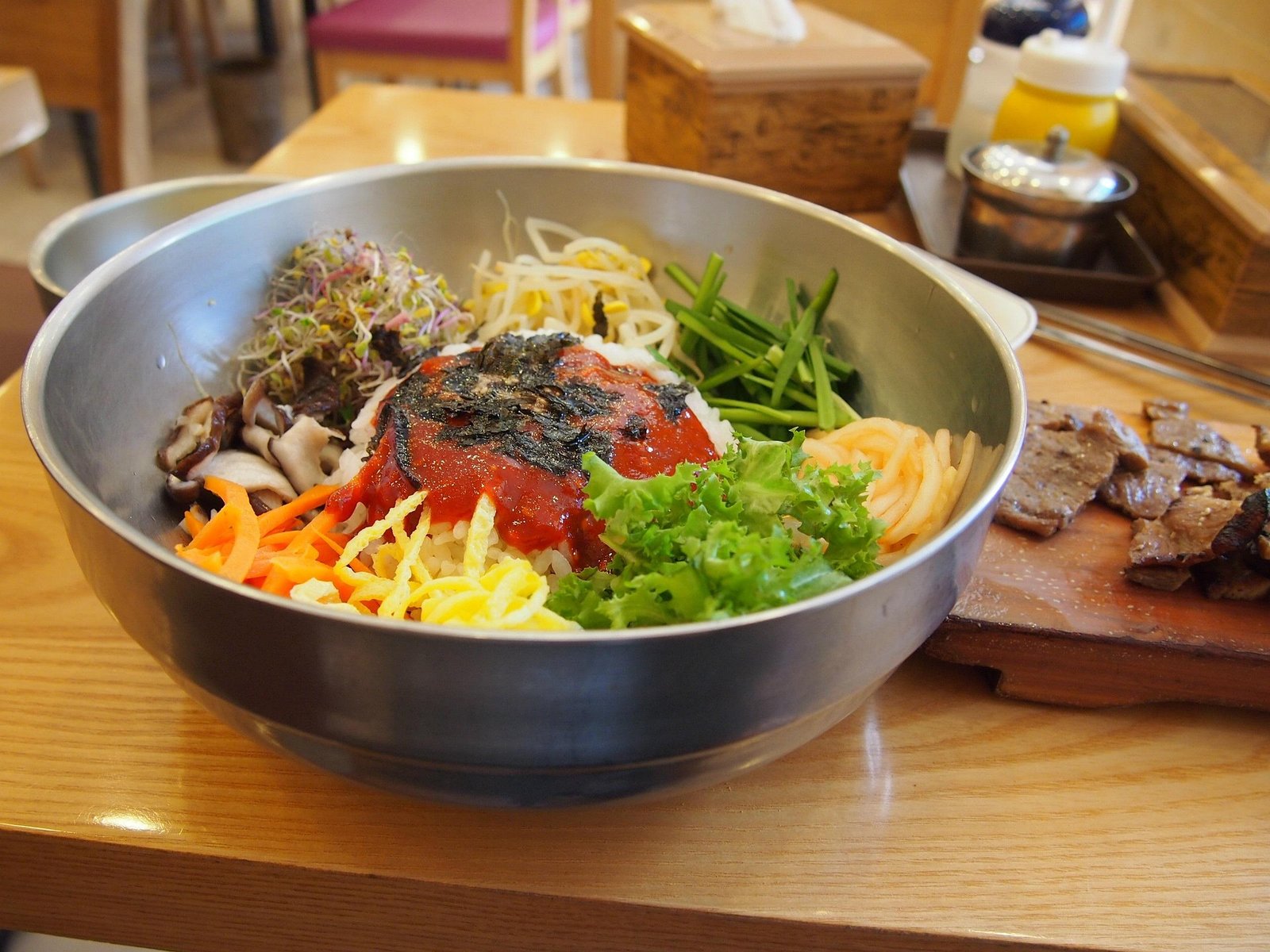
Bibimbap (비빔밥): Order vegetable bibimbap (yachae bibimbap) without meat (gogi) and without egg (gyeran). Double-check that the gochujang sauce hasn’t been mixed with minced beef.
-
Gimbap (김밥): Ask for vegetable gimbap (yachae gimbap) and specify no ham (ham), no egg (gyeran), and no crab stick (onasal / crab-meat).
-
Sundubu Jjigae (순두부찌개): Soft tofu stew can be prepared with a vegetable broth base if requested in advance, though standard versions default to anchovy or pork stock.
-
Kongguksu (콩국수): A seasonal summer dish featuring cold wheat noodles in a thick, creamy, freshly ground soybean broth. It is naturally vegetarian and often completely vegan.
Plant-Based & Vegan Restaurants in Major Cities
If you are looking for 100% vegan or highly accommodating plant-based dining, here are well-known spots across Korea’s primary cities:
Seoul
-
Balwoo Gongyang (Jongno-gu) – Michelin-starred authentic Temple Cuisine offering seasonal multi-course vegan menus near Insadong.
-
Plant Cafe Seoul (Itaewon & Yeonnam-dong) – A long-standing expat favorite offering 100% plant-based comfort food, including veggie burgers, pasta, salads, and freshly baked cakes.
-
Monk’s Butcher (Itaewon) – A stylish, upscale dining venue specializing in creative vegan pasta, steaks, and craft cocktails.
Busan
-
Home Bistro & Cafe (Gwangalli) – A popular 100% vegan bistro near Gwangalli Beach serving plant-based burgers, wraps, and Western comfort dishes.
-
Nayuta Cafe (Jangjeon-dong / PNU area) – A cozy, eco-conscious vegan eatery featuring a daily changing chef’s menu based on fresh local produce.
Daegu & Incheon
-
The Common (Daegu) – A zero-waste vegan cafe and grocery shop serving hearty plant-based bowls, sandwiches, and eco-friendly home goods.
-
Vegetus (Haebangchon, Seoul / expanded shipping) – Renowned for house-made paninis, lentil burgers, and gluten-free vegan desserts.
Essential Phrases for Communicating Your Diet
Most traditional restaurant owners may not fully understand the word “vegan” (bigeon), assuming it simply means avoiding red meat. Showing clear, specific phrases on your phone or reading them aloud is the best way to ensure your food is prepared correctly.
Key Phrases to Show or Speak
| What You Want to Say | Korean Script | Pronunciation (Phonetic) |
| “I am a vegetarian.” | 저는 채식주의자입니다. | Jeo-neun chae-sik-ju-ui-ja im-ni-da. |
| “I am a vegan.” | 저는 비건입니다. | Jeo-neun bi-geon im-ni-da. |
| “Please remove all meat.” | 고기는 모두 빼주세요. | Go-gi-neun mo-du bbae-ju-se-yo. |
| “Please do not include eggs or milk.” | 계란이랑 우유 넣지 말아주세요. | Gye-ran-i-rang u-yu neok-ji ma-ra-ju-se-yo. |
| “Does this contain fish sauce or anchovy broth?” | 여기에 액젓이나 멸치육수가 들어가나요? | Yeo-gi-e aek-jeot-i-na myeol-chi-yuk-su-ga deul-eo-ga-na-yo? |
| “Please cook this with vegetable broth only.” | 채수(채소 육수)로만 요리해 주세요. | Chae-su (chae-so yuk-su)-ro-man yo-ri-hae ju-se-yo. |
| “I cannot eat meat, seafood, or eggs.” | 저는 고기, 해산물, 계란을 못 먹어요. | Jeo-neun go-gi, hae-san-mul, gye-ran-eul mot meok-eo-yo. |
Essential Apps & Active Resources for Expats
-
HappyCow – The single best app and directory for finding 100% vegan, vegetarian, and veg-friendly cafes and restaurants across South Korea.
-
Naver Map – The primary navigation app in South Korea. Searching terms like “비건” (vegan) or “채식” (vegetarian) directly in Naver Map brings up local plant-based spots faster than Google Maps.
-
Papago Translation – Naver’s dedicated translation tool. Use its camera-translation feature to scan ingredient lists on packaged goods at convenience stores and supermarkets.
-
Vegan Korea Facebook Group – An active community of expats and locals sharing real-time product updates, restaurant reviews, and practical living tips.