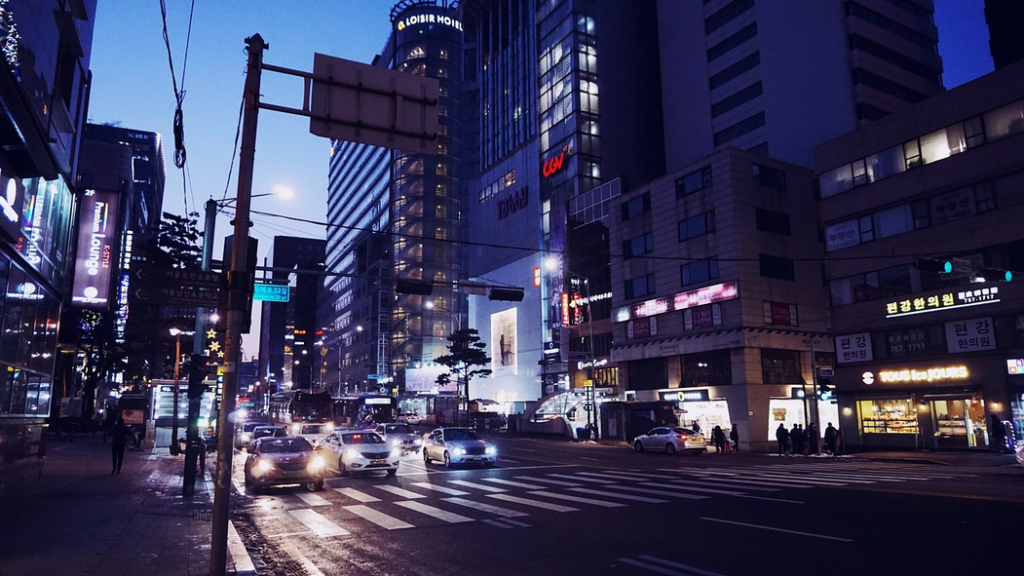
Moving to a new country can feel daunting, but when it comes to getting around South Korea, you can leave your commuting anxiety at the border. Korea boasts one of the most efficient, safe, affordable, and technologically advanced public transportation networks in the world.
Whether you are navigating the bustling streets of Seoul, traveling across Busan, or taking a weekend trip to explore rural provinces, public transit will quickly become your best friend.
Here is everything a new ESL teacher needs to know to master Korean public transit like a local.
1. The Key to Everything: The T-Money Card
Before taking your first subway or bus ride, you need a T-Money card (or a Cashbee card). This is a reloadable, touch-and-go transit card that works across virtually all subways, city buses, and even taxis throughout the country.
-
Where to get one: You can buy a T-Money card at any convenience store (GS25, CU, Seven-Eleven, Emart24) as soon as you arrive. Cards cost around 2,500 to 4,000 KRW ($2–$3 USD) for a basic design.
-
How to charge it: You can reload your card with cash (Korean Won) at automated kiosks inside every subway station or directly at any convenience store counter.
-
The Transfer Discount: T-Money automatically tracks your transfers. If you switch from subway to bus (or between buses) within 30 minutes, your transfer is usually free or deeply discounted. Always remember to tap your card when exiting the bus or station!
2. Navigating the Subway Network
If you are placed in a major city like Seoul, Busan, Daegu, Incheon, or Gwangju, the subway system will be your primary way to travel.
-
Color-Coded & Numbered: Every subway line is color-coded, and every station has a unique 3-digit number (e.g., Line 2/Green Line). Even if you can’t read Korean yet, you can easily follow line numbers and colors on station maps.
-
Multilingual Signage & Announcements: Station names, transfer alerts, and exit maps are displayed in English, Korean, Mandarin, and Japanese. Audio announcements on trains clearly announce upcoming stops in English.
-
Platform Screen Doors: All major subway platforms feature floor-to-ceiling glass safety doors that open only when the train comes to a complete stop, making stations clean, quiet, and exceptionally safe.
-
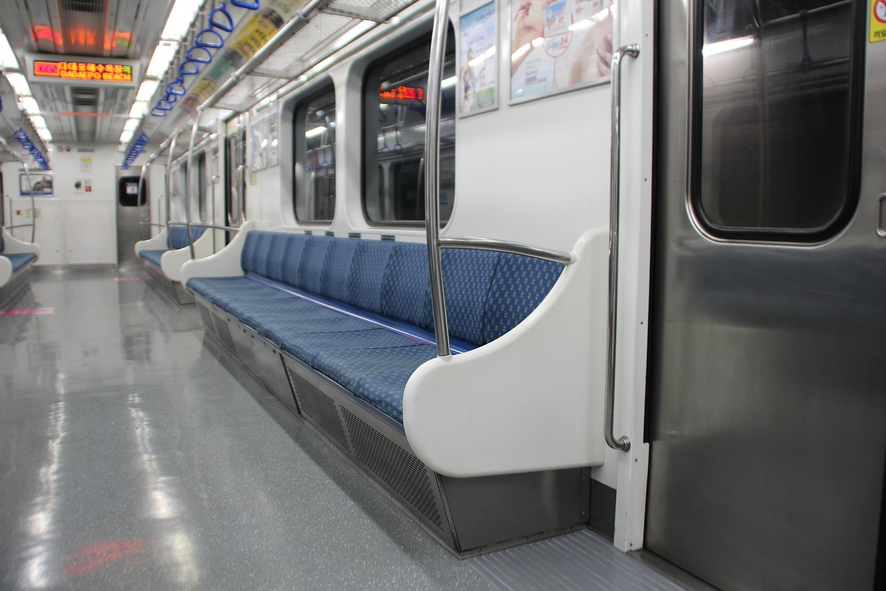
Subway Etiquette: Keep your voice down, refrain from taking phone calls on the train, and always leave designated priority seats (marked at the ends of cars) open for the elderly, pregnant women, and people with disabilities.
3. Mastering City Buses
City buses reach every neighborhood that subways miss. While they can feel intimidating at first, they are fast and very budget-friendly.
City buses are generally color-coded by route type:
-
Blue Buses: Connect suburban areas to downtown hub stations.
-
Green Buses: Local neighborhood feeder buses that connect residential areas to nearby subway stations.
-
Red Buses: Express commuter routes connecting outer satellite cities (like Suwon or Ilsan) directly to central Seoul.
-
Yellow Buses: Circulation routes around specific downtown shopping or tourist districts.
Pro Tip: Always board through the front door, tap your T-Money card on the reader, and exit through the middle/back door, tapping out on the exit reader as you step off.
4. Ditch Google Maps: Must-Have Transit Apps
One crucial surprise for new expats: Google Maps does not provide reliable turn-by-turn walking or driving transit directions in South Korea due to local mapping data security laws.
To navigate effortlessly, download these essential apps before or as soon as you land:
| App Name | Primary Use | Why You Need It |
| Naver Map | Navigation & City Routes | The gold standard map app in Korea. Fully supports English, provides real-time bus arrivals, subway transfer routes, and door-to-door walking directions. |
| KakaoMap | Alternative Navigation | Excellent secondary mapping app with real-time transit schedules, street views, and English language support. |
| Kakao T | Taxi Hailing | Korea’s answer to Uber/Lyft. Lets you hail official metered taxis directly to your exact location, view estimated fares, and pay via cash or card. |
| Subway Korea / KakaoSubway | Metro Routing | Clean, dedicated subway route planners showing exact train arrival times, optimal transfer cars, and station exit maps. |
5. Long-Distance Travel: Exploring Korea on Weekends
One of the biggest perks of living in South Korea as an ESL teacher is how easy it is to travel for a weekend getaway.
KTX & SRT (High-Speed Trains)
Korea’s high-speed rail networks (KTX operated by Korail, and SRT) travel up to 305 km/h (190 mph). You can travel from Seoul to Busan in under 2.5 hours!
-
You can easily book tickets in English via the official Korail website or app up to one month in advance.
Express & Intercity Buses
For destinations not connected by high-speed rail, Korea’s intercity bus network is world-class. Express buses feature wide, reclining leather seats (look for “Premium” or “Excellence” bus tier options) and run frequently from central bus terminals in every major city.
Quick Checklist for Your First Week
-
Pick up a T-Money card at the airport or your neighborhood convenience store and load 20,000 KRW cash.
-
Download Naver Map and Kakao T onto your smartphone and set the display language to English.
-
Save your school address and home apartment address in English and Korean on your phone for easy reference when using taxis or navigation apps.
Public transportation in Korea is reliable, clean, safe, and inexpensive. Within your first two weeks, navigating subways and hopping on buses will feel second nature!