Landing at Incheon Airport with two massive suitcases, a legal contract in hand, and zero functional Korean is a rite of passage for every expat English teacher. Having spent ten years navigating the classroom corridors, hagwon (private academy) management, and public school placements across South Korea, I can tell you that the single most important factor shaping your daily happiness isn’t your lesson plan or your air fryer—it’s your neighborhood.
In Seoul, your housing is rarely just a place to sleep. Most hagwon contracts provide a employer-leased studio apartment (one-room), while public programs like EPIK offer a stipend or assigned housing. Regardless of whether you get to pick your district or are assigned one, understanding the personality, transit geography, housing quality, and social dynamics of Seoul’s neighborhoods is essential.
Here is the deep-dive, no-nonsense guide to the top 10 Seoul neighborhoods for ESL teachers, expanded with granular advice on housing quirks, commute dynamics, and practical expat survival.
1. Hongdae & Yeonnam-dong (Mapo-gu)
The Creative Pulse of Western Seoul
Hongdae (named after nearby Hongik University) is the undisputed hub of Seoul’s youth culture, busking, indie music, and nightlife. Directly across the main thoroughfare lies Yeonnam-dong, a converted residential quarter centered around the Gyeongui Line Forest Park—a narrow linear greenway affectionately dubbed the “Yeontral Park” by locals.
The Expat Reality
Hongdae is energetic, raw, and constantly evolving. If you thrive on constant social stimulation, meeting fellow creatives, and stepping out your front door directly into a live street performance, this is your zone. Yeonnam-dong balances this with artisanal bakeries, boutique coffee shops, and quiet residential lanes.
Pros
-
Transit Goldmine: Hongik University Station connects Line 2 (the circular lifeline of Seoul), the AREX (express train to Incheon and Gimpo airports), and the Gyeongui-Jungang Line. Getting anywhere in western or central Seoul is fast.
-
Effortless Social Life: You will never feel isolated. Foreigners, university students, and locals mingle in every bar, lounge, and cafe.
-
Diverse Dining: Exceptional foreign food options, cheap student-priced eats, and endless late-night pojangmacha (street food stalls).
Cons
-
Tiny, Aging Housing: Standard teacher housing here consists of older, cramped one-rooms (studio apartments) where your washing machine might double as your kitchen counter.
-
Weekend Chaos: Expect loud music, drunk crowds, and garbage-littered alleys until Sunday afternoon.
-
High Distraction Factor: If you need quiet to recharge after managing thirty energetic eight-year-olds all day, Hongdae will burn you out.
2. Itaewon & Haebangchon (HBC) (Yongsan-gu)
The International Anchor & Mountain Slopes
Historically developed around the former US Military Base at Yongsan, Itaewon and its neighboring enclave Haebangchon (“Freedom Village,” or HBC) remain the central headquarters for Seoul’s international community. Nestled along the southern slopes of Namsan Mountain, HBC offers narrow, winding streets crammed with craft breweries, vegan cafes, and rooftop bistros.
The Expat Reality
Living here cushions your culture shock. You can buy real sourdough, find imported groceries like peanut butter or specialty spices without paying outrageous shipping fees, and speak English at your local pub. However, it can easily turn into an isolation chamber where you never actually experience Korea.
Pros
-
Unmatched Convenience for Western Comforts: Foreign grocery stores (like Foreign Food Mart), English-speaking clinics, and authentic global cuisine (Mexican, Middle Eastern, Ethiopian, Western BBQ).
-
Instant Community: From trivia nights to social running clubs, finding an English-speaking social circle takes almost no effort.
-
Central Location: Located in Yongsan-gu, right in the geographic heart of Seoul south of Namsan.
Cons
-
Brutal Hill Inclines: HBC is built on a steep incline. Walking home from the subway with heavy grocery bags is an absolute physical workout.
-
The “Itaewon Bubble”: It is entirely possible to live here for two years without using a single word of Korean or making local friends.
-
Higher Expat Markups: Rent, Western-style meals, and imported draft beer are significantly more expensive than in outer districts.
3. Seongsu-dong (Seongdong-gu)
The Brooklyn of Seoul & Urban Green Spaces
Once an industrial sector of shoe factories and auto repair shops, Seongsu-dong has evolved into Seoul’s premier design district. Characterized by repurposed red-brick warehouses, flagship pop-up stores, and high-concept cafes, it sits directly adjacent to Seoul Forest, a massive 290-acre park featuring deer enclosures, walking trails, and river views.
The Expat Reality
Seongsu offers a polished, aesthetic, and mature lifestyle. It appeals to teachers who want a trendy urban environment without the wild, drunk university crowds of Hongdae.
Pros
-
Seoul Forest at Your Doorstep: Unbeatable access to outdoor recreation, cycling, and green space—a rare luxury in hyper-dense Seoul.
-
Vibrant Cafe & Design Scene: Endless rotating pop-up shops, contemporary art galleries, and world-class specialty coffee roasting houses.
-
Prime Location: Quick commute to Gangnam via the Suin-Bundang Line or to central districts via Line 2.
Cons
-
Skyrocketing Costs: Rapid gentrification means higher coffee prices, expensive boutique groceries, and higher rent allowances needed for private leasing.
-
Weekend Influx: The main drag of Seongsu becomes an absolute parking lot of domestic tourists every weekend.
-
Lacks Nightlife Depth: Most cafes and shops close early; this is not a district for late-night partygoers.
4. Gangnam Station & Yeoksam (Gangnam-gu)
The Corporate Powerhouse & Hagwon Central
Gangnam is Seoul’s commercial, corporate, and private-education mega-hub. If you are hired to teach corporate business English to adults, work at a flagship high-end hagwon, or teach test-prep (SAT/TOEFL) courses, there is an overwhelming probability your school will be located along the main Gangnam-daero artery.
The Expat Reality
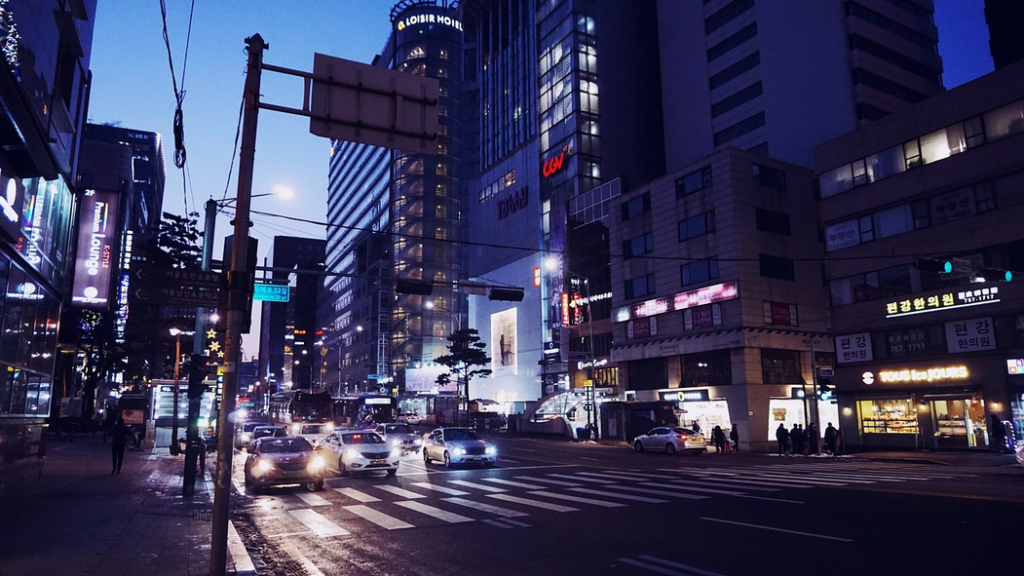
Living in Gangnam means living in the high-octane center of Korean capitalism. Expect high-rise office towers, bright neon signs, massive underground malls, and fast-paced crowds.
Pros
-
Zero Commute Stress: If your school is in Gangnam, living in Yeoksam or Gangnam Station saves you from the infamous rush-hour subway squeeze on Line 2.
-
Modern Housing Infrastructure: Higher concentration of newer, well-maintained officetels (multi-story residential/commercial buildings) featuring building security, elevators, and modern built-in appliances.
-
Transit Grid Hub: Access to Line 2, the high-speed Sinbundang Line (reaching southern suburb hubs quickly), and regional express buses across the entire country.
Cons
-
Sterile & Corporate Atmosphere: Lacks the artistic, bohemian, or historic charm found north of the Han River.
-
High Cost of Daily Life: Gym memberships, casual lunch spots, and local services carry a heavy “Gangnam tax.”
-
Intense City Noise: Continuous traffic, sirens, and construction noise can make peaceful relaxation difficult.
5. Sinchon & Edae (Seodaemun-gu)
The Budget-Friendly Student Enclave
Situated between Hongdae and Gwanghwamun, Sinchon and Edae encompass the campuses of Yonsei University, Ewha Womans University, and Sogang University. The district is catered almost entirely to university students, featuring affordable restaurants, quiet study cafes, karaoke boxes (norebang), and budget fashion outlets.
The Expat Reality
Sinchon offers the youth energy of Hongdae, but at a more relaxed, budget-conscious pace. It’s an ideal location for first-year teachers looking to stretch their salary, save money, or take Korean language classes at Yonsei’s famous Korean Language Institute (KLI) during their off-hours.
Pros
-
Highly Economical: Food, groceries, street snacks, and personal services are priced for student budgets.
-
Ideal Strategic Location: Sitting directly on Line 2, you are five minutes from Hongdae and ten minutes from the downtown government/business district (Jongno/Gwanghwamun).
-
Pedestrian-Friendly Streets: The main stretch of Sinchon is car-free on weekends, hosting student markets, festivals, and music performances.
Cons
-
High Student Turnover: The neighborhood feels transient as students move in and out each semester, making long-term residential roots harder to establish.
-
Modest Accommodation: Many housing options are smaller one-rooms or gosiwon (micro-studios) built for temporary university housing.
6. Hyehwa / Daehangno (Jongno-gu)
The Arts & Theater Quarter
Located in northeastern Seoul, Hyehwa (centered around Daehangno, or “University Street”) is Seoul’s official performing arts district. It boasts over 100 small independent theaters, historic brick buildings, and an artistic heritage dating back to when Seoul National University’s main campus was located here.
The Expat Reality
Hyehwa is a gem for teachers seeking culture, history, and a uniquely local community vibe. It lies at the base of Naksan Park, where you can walk along the ancient Seoul City Wall and take in sweeping views of the metropolis.
Pros
-
Rich Cultural Immersion: Constant live plays, independent musicals, busking, and indie art exhibitions.
-
Scenic Historical Access: Immediate access to Naksan Park, Ihwa Mural Village, and quick walks to Changgyeonggung Palace.
-
Less Commercialized Expat Scene: Offers an authentic Korean urban experience where locals outnumber tourists significantly.
Cons
-
Older Building Infrastructure: Residential apartments here tend to be older, which means draftier winters, older plumbing, and fewer modern building amenities.
-
Subway Line 4 Overcrowding: Hyehwa Station sits on Line 4, which experiences brutal congestion during the morning and evening rush hours.
7. Jamsil (Songpa-gu)
The Structured, Waterfront Residential Oasis
Jamsil is a master-planned neighborhood located in southeastern Seoul, famous for the 123-story Lotte World Tower, Seokchon Lake, and the Jamsil Sports Complex. It represents polished, suburban-style high-density urban living.
The Expat Reality
Jamsil is clean, extremely safe, and wide-open. If your teaching placement is in Songpa-gu or southern Seoul, Jamsil provides an orderly, peaceful retreat from the chaotic alleyways typical of older northern districts.
Pros
-
Superb Green & Water Access: Seokchon Lake offers a gorgeous tree-lined loop for morning runs, and the Han River Park is within walking distance.
-
Modern Urban Infrastructure: Wide sidewalks, hyper-modern subterranean malls (Lotte World Mall), organized bike lanes, and vast department stores.
-
Excellent Transit Hub: Jamsil Station is a massive transit interchange connecting Line 2 and Line 8, alongside a underground express bus terminal.
Cons
-
Cookie-Cutter Vibe: Can feel overly sanitized, commercialized, and lacking in gritty neighborhood character.
-
Geographically Isolated from Western Hubs: Commuting to western hangouts like Hongdae or Mapo takes over 40–50 minutes via Line 2.
8. Gongdeok & Mapo (Mapo-gu)
The Transit Super-Hub & Culinary Crossroads
Gongdeok is a major commercial and residential intersection situated directly north of the Han River, just across Mapo Bridge. Famous across the city for its working-class galbi (pork rib) lanes and the famous Gongdeok Market jeon (savory pancakes) alley, it balances corporate office towers with charming residential pockets.
The Expat Reality
Gongdeok is widely considered by long-term expat professionals and career teachers to be one of the absolute best logistical bases in all of Seoul. It lacks tourist flashiness, but makes up for it with unmatched functional convenience.
Pros
-
The Four-Line Transit Mega-Hub: Gongdeok Station links Line 5, Line 6, the AREX (airport railroad), and the Gyeongui-Jungang Line. You can cross Seoul in any cardinal direction effortlessly.
-
Direct River Access: A brief walking distance down to the Mapo Han River Park for running, outdoor gyms, and riverfront relaxation.
-
Fantastic Food Scene: Home to some of the best traditional markets, local Korean BBQ joints, and working-class eateries in the city.
Cons
-
High-Rise Financial Aesthetic: Heavily dominated by tall office blocks and apartment towers, which can feel cold visually.
-
Early Nightlife Shutdown: Bars and restaurants here cater to office workers; the neighborhood goes quiet fairly early on weeknights.
9. Sillim & Bongcheon (Gwanak-gu)
The Budget-Saver’s Mountain Gateway
Located south of the Han River near the prestigious Seoul National University (SNU), Gwanak-gu is one of Seoul’s most affordable residential sectors. Sillim, in particular, is famous for its massive single-person housing density, cheap street dining (including the famous “Sundae Town” alley), and proximity to Gwanaksan Mountain.
The Expat Reality
If you are on an apartment allowance scheme and trying to maximize your financial savings, or if you simply love hiking outdoor trails, Sillim is a pragmatic, cost-effective base.
Pros
-
Low Cost of Living: Rents, food markets, local services, and daily essentials are noticeably cheaper than almost anywhere else on Line 2.
-
Abundant Single-Person Housing: Endless options for affordable studio apartments (one-rooms) catered to young workers and SNU students.
-
Gwanaksan Mountain Access: Direct access to one of Seoul’s finest hiking trails right from your back door.
Cons
-
Dense, Congested Alleys: The neighborhood layout features narrow, packed residential alleys that can feel dark and congested at night.
-
Long Commutes North: Getting to northern cultural centers like Jongno, Hyehwa, or Hongdae requires crossing the river and transferring lines.
10. Mullae-dong (Yeongdeungpo-gu)
The Industrial-Chic Artistic Haven
Mullae-dong is a unique urban hybrid: an active metalworking and steel-fabrication district that has seamlessly transformed into an indie art colony. In Mullae, functioning ironworks shops line the streets by day, while hidden behind their metallic shutters lie artisanal coffee shops, indie music venues, cocktail bars, and rooftop art studios.
The Expat Reality
Mullae offers a cool, industrial-chic environment without the overwhelming weekend crowds or astronomical costs seen in Seongsu-dong. It appeals to teachers looking for an offbeat, creative, and local community vibe.
Pros
-
Distinct Industrial Aesthetic: Gritty, atmospheric, and highly creative; packed with hidden speakeasies, indie breweries, and local galleries.
-
Direct Line 2 Connection: Mullae Station sits directly on subway Line 2, providing smooth access across the capital.
-
Fewer Tourist Crowds: Retains a genuine local, neighborhood feel where you can escape heavy tourist congestion.
Cons
-
Weekday Industrial Noise: Sparks fly and heavy machinery operates during standard business hours in the central steel workshop grid.
-
Fewer Western Amenities: Limited access to large Western-style supermarkets or foreign import shops within immediate walking distance.
Comparative Neighborhood Matrix
| Neighborhood | Vibe / Atmosphere | Primary Subway Connections | Best For… | Housing Cost / Style |
| Hongdae / Yeonnam | High-energy, youth culture, creative | Line 2, AREX, Gyeongui-Jungang | Nightlife, socializing, cafes | Moderate-High / Older, smaller studios |
| Itaewon / HBC | International, multicultural, hilly | Line 6 | Western comforts, non-Korean food | High / Mixed older villas & studios |
| Seongsu-dong | Trendy, industrial-chic, scenic | Line 2, Suin-Bundang | Cafe culture, boutique living, parks | Very High / Modernized apartments |
| Gangnam / Yeoksam | High-octane, corporate, modern | Line 2, Sinbundang | Hagwon commute, corporate living | High / Modern, secure officetels |
| Sinchon / Edae | Youthful, academic, casual | Line 2 | Student budgets, language study | Low-Moderate / Compact student studios |
| Hyehwa | Cultural, theatrical, historic | Line 4 | Performing arts, history, hiking | Moderate / Older residential apartments |
| Jamsil | Clean, structured, waterfront | Line 2, Line 8 | Water recreation, quiet living | High / Modern high-rise complexes |
| Gongdeok | Professional, culinary, central | Line 5, Line 6, AREX, Gyeongui-Jungang | Transit logistics, river access | Moderate-High / High-rise officetels |
| Sillim | Dense, informal, mountainous | Line 2, Sillim Line | Aggressive budget saving, hiking | Low / Abundant, affordable one-rooms |
| Mullae-dong | Artisanal, industrial, indie | Line 2 | Indie culture, craft beer, quiet | Moderate / Loft-style & mixed studios |
5 Critical Expat Housing & Neighborhood Survival Tips
Beyond choosing your location, living in Seoul as an ESL teacher comes with unique logistical realities that can catch new expats off guard. Here is what you need to know before signing a lease or unpacking your bags:
1. The “Hagwon Radius” Dilemma: Proximity vs. Separation
It is very common for hagwons to provide housing within a 5-to-10-minute walk from the school building.
-
The Pro: Zero commute costs, sleep in late, and the ability to go home during long midday split-shift prep breaks.
-
The Con: Zero privacy. You will inevitably run into your elementary students and their parents at the local convenience store, grocery aisle, or gym while wearing sweatpants on a Saturday morning.
-
Teacher Verdict: Many veteran teachers prefer taking a 15-to-20-minute subway or bus ride to work. It creates a psychological boundary between your stressful teaching day and your personal life.
2. Navigating the Korean One-Room (Studio) Realities
School-provided teacher housing in Korea is almost universally a one-room (bachelor studio). Keep these quirks in mind:
-
The “Wet Room” Bathroom: Most Korean studio bathrooms do not have a separate glass shower stall or bathtub. The showerhead is mounted directly to the wall, and the entire bathroom (toilet, sink, floor) gets wet when you shower. Buy rubber bathroom slippers immediately!
-
Floor Heating (Ondol): Korea uses radiant underfloor gas heating (ondol) controlled by a wall unit. Ensure your co-teacher or director shows you how to program this controller during your first week. Leaving the floor heat running on high all winter will result in a gas bill that will shock your monthly budget!
-
Ovens & Bathtubs Are Rare: Do not expect a traditional Western-style baking oven or full-sized bathtub. Most teachers rely on counter-top air fryers, toaster ovens, and electric hot plates.
+-----------------------------------------------------------------------+
|  EXPAT CHECKLIST: YOUR FIRST WEEK IN THE APARTMENT                    |
|  [ ] Learn to operate the Ondol (floor heating) & boiler wall panel    |
|  [ ] Buy standard rubber slippers for the wet-room shower setup       |
|  [ ] Locate district-specific pre-paid trash bags (Jongnyangje)       |
|  [ ] Purchase an air fryer or toaster oven (if baking/roasting)        |
+-----------------------------------------------------------------------+
3. Strict Garbage & Recycling Rules (Jongnyangje)
South Korea takes waste management and recycling very seriously. You cannot simply throw all your trash into a black plastic bag.
-
General Trash: Must be disposed of in official, district-specific pre-paid trash bags (jongnyangje bongtu) purchased at local convenience stores or markets. Every district (Mapo-gu, Yongsan-gu, Gangnam-gu) has its own distinct bag.
-
Food Waste (Eumsikmul Sseregi): Food waste must be strictly separated from general garbage and disposed of in separate yellow or orange food waste bags (or designated electronic bin systems).Throwing food into general trash will result in hefty municipal fines.
-
Recycling: Plastics, glass, paper, aluminum, and vinyl must be thoroughly rinsed, sorted, and separated into designated recycling bins.
4. Public Transit Strategy: Master the Climate Card
Seoul boasts one of the most efficient, clean, and cheap public transit systems in the world.
-
Transit Cards: You can use a rechargeable T-Money card (available at any convenience store) or set up a transit-enabled local debit card.
-
Unlimited Transit Pass: Look into getting a Climate Card (Gihoo Donghaeng Card), a monthly unlimited public transit pass covering Seoul’s subways and municipal buses. It pays for itself rapidly if you commute daily and explore on weekends.
-
The Rush-Hour Trap: Avoid subway Line 9 (express service) and Line 2 during 8:00–9:00 AM and 6:00–7:00 PM if possible. The rush-hour crowding can be overwhelming for newcomers.
5. Essential Expat Smartphone Apps
Living comfortably in your new neighborhood requires downloading the correct local digital tools immediately, as Western applications like Google Maps have limited functionality in South Korea due to local mapping regulations:
-
Naver Maps / KakaoMap: Essential for turn-by-turn walking navigation, real-time bus arrival tracking, and subway route planning.
-
Papago: The gold-standard translation app for Korea (far more accurate than Google Translate for Korean context and text-image translation).
-
Coupang: The Amazon of South Korea. Provides next-day “Rocket Delivery” for household goods, bedding, appliances, and groceries.
-
Shuttle / Baedal Minjok (Baemin) / Coupang Eats: Premium food delivery apps that bring hot meals directly to your apartment door.
Final Thoughts: Making Seoul Your Home
No matter which neighborhood you end up living in—whether it’s the high-energy streets of Hongdae, the scenic slopes of HBC, or a quiet residential pocket in Songpa—Seoul is a hyper-connected city. The subway system ensures that no district is ever truly isolated, making weekend exploration easy and budget-friendly.
Embrace your neighborhood’s unique quirks, learn the local food stalls, make friends with the cashier at your local GS25 convenience store, and give yourself grace during your first few months. Living and teaching in Seoul is a wild, rewarding adventure—and finding your ideal neighborhood corner is where that journey truly begins!